
Updated October 2026 · Reviewed by the Judd Septic Tank Cleaning team, Middlefield, OH
Quick answer: Ohio has no statewide rule requiring a septic inspection when you sell a home, and Geauga and Portage counties don’t mandate one at the point of sale either. Buyers and lenders still expect one, so a pre-listing septic tank inspection and pumping prevents surprises, delays, and price cuts at closing.
For a Northeast Ohio home that isn’t on city sewer, the septic system is one of the first things a buyer’s inspector examines. This guide explains what Ohio law requires, what an inspection covers, and what to do if the system fails, based on Judd Septic’s real-estate work across Cuyahoga, Geauga, Lake, and Portage counties.
Table of contents
- Is a septic inspection required to sell a house in Ohio?
- Why should you inspect your septic system before listing?
- What does a pre-sale septic inspection check?
- Should you pump the septic tank before selling?
- What if your septic system fails inspection?
- How do you prepare your septic system for a sale?
- Pre-sale septic inspection checklist
- TL;DR
- FAQ
Is a septic inspection required to sell a house in Ohio?
Ohio has no statewide law requiring a septic inspection at the point of sale. The Ohio Department of Health sets the state’s septic rules in Ohio Administrative Code Chapter 3701-29, and those rules leave transfer inspections to each county health district. That means the answer depends on where the house sits.
In Judd Septic’s service area, the current picture looks like this:
- Geauga County ran a mandatory point-of-sale inspection program for more than 20 years. The Geauga Public Health Board ended it on June 30, 2022. Property transfers on or after July 1, 2022, no longer trigger an inspection. The county replaced it with an operation and maintenance (O&M) program that monitors every septic system, not just homes being sold (Ohio REALTORS).
- Portage County has no mandatory transfer inspection. The Portage County Health District offers a voluntary, fee-for-service real-estate inspection and states that it “highly recommend[s]” a septic inspection before a property transfer (Portage County Health District).
- Cuyahoga and Lake counties each set their own permit and O&M schedules. Confirm the current requirements with your county health district before you list.
A missing legal requirement does not remove the practical one. Buyers, buyers’ agents, home inspectors, and lenders treat the septic system as a major line item, especially on rural and semi-rural properties in Geauga County and Portage County. A seller who arrives with a current inspection report answers the question before it slows the deal.
Why should you inspect your septic system before listing?
A pre-listing inspection puts the seller in control of the timeline. When the buyer’s inspector finds a septic problem first, the seller negotiates under a closing deadline with little room to shop for repairs or get a second opinion.
A pre-listing septic inspection delivers four clear advantages:
- No surprises at closing. A failed drain field discovered two weeks before closing stalls the sale, reopens price talks, or ends the contract.
- A stronger negotiating position. A written report and a dated pumping receipt are documentation, not promises. Buyers discount uncertainty more heavily than known, fixed problems.
- Time to fix small problems at small prices. A missing baffle, a clogged outlet filter, or a failed pump float is a routine repair. Left alone, the same issue leads to a sewage backup or a saturated leach field.
- Accurate disclosure. Ohio sellers complete a residential property disclosure form. A recent inspection lets you describe the system’s condition accurately instead of guessing.
How does septic condition affect your sale price?
The septic system is one of the most expensive components on a rural property. A buyer who sees an unknown system assumes the worst case, which is full replacement, and prices that risk into the offer. A buyer who sees a clean report and a recent pumping receipt has no reason to apply that discount. A documented, working system protects your asking price; an undocumented one invites a lower offer or a repair credit.
What does a pre-sale septic inspection check?
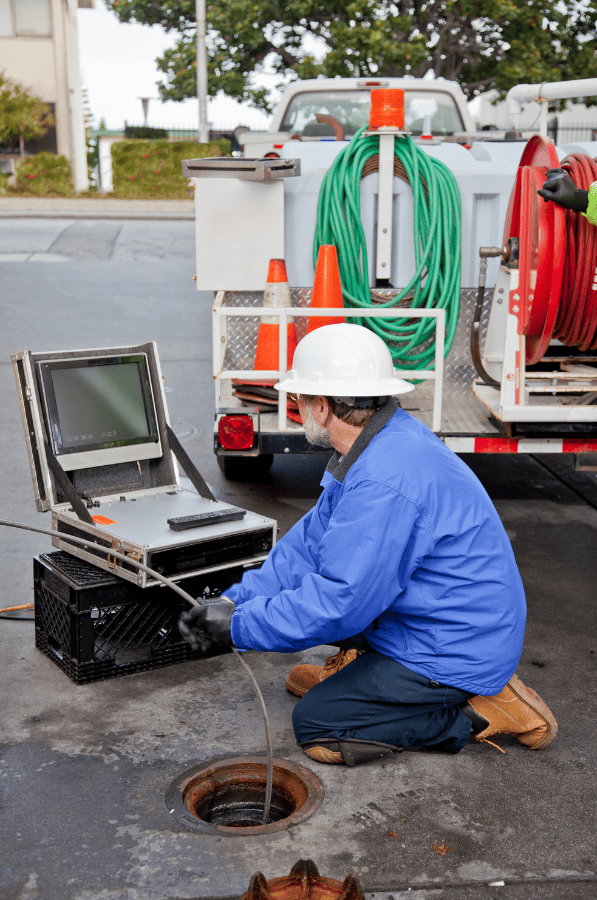
A pre-sale septic inspection evaluates the full system, from the building sewer to the drain field. The U.S. EPA recommends inspecting a typical household system at least every three years and states that a service provider will “inspect for leaks and examine the scum and sludge layers in your septic tank.” A real-estate inspection covers that and more, because the buyer needs to know the system will keep working after closing.
On a Judd Septic septic tank inspection, the crew:
- Locates and uncovers the tank lids.
- Measures the sludge and scum layers.
- Checks the inlet and outlet baffles, the tank walls, and the outlet filter.
- Confirms wastewater flows from the house to the tank and from the tank to the drain field.
- Walks the drain field for surface wetness, odor, and unusual vegetation.
- Tests the pump, float, and alarm on systems that have them.
What warning signs should sellers look for first?
These signs point to a problem that an inspection will confirm:
- Slow drains or gurgling in more than one fixture.
- Sewage odor near the tank or drain field.
- Wet, spongy ground or standing water over the drain field in dry weather.
- A strip of grass that grows greener and faster than the rest of the yard.
- Wastewater backing up into the lowest drain in the house.
A seller who notices any of these should schedule the inspection immediately rather than waiting for the buyer’s inspector to find it.
Should you pump the septic tank before selling?
Yes, in most cases. The EPA states that household septic tanks are typically pumped every three to five years. A tank needs pumping when the sludge and scum take up more than 25% of its liquid depth, when the top of the sludge sits within 12 inches of the outlet, or when the bottom of the scum layer sits within six inches of the outlet.
Pumping before a sale does two jobs at once. It gives the inspector a clear view of the tank walls, baffles, and pipe connections, and it gives the buyer a dated receipt that proves recent maintenance. Judd Septic pairs septic tank cleaning and pumping with the inspection so the tank is opened once and both jobs are documented on the same visit.
Pumping is not a substitute for an inspection. An empty tank looks clean even when the drain field is failing, and experienced buyers’ inspectors know this. The pumping receipt and the inspection report belong together.
What if your septic system fails inspection?
A failed septic inspection does not end a home sale. It changes the plan. Sellers have three realistic paths, and the right one depends on what failed, how much time is left, and the budget available.
| Option | Best when | Trade-off |
| Repair before listing | The problem is in the tank, baffles, pipes, or pump | Short delay, lowest cost |
| Replace the system | The drain field has failed or the system is decades old | Highest cost; requires a health-district permit |
| Sell as-is | Repairs are unaffordable or the timeline is too short | Lower price, faster closing |
Repair the system
Most failed inspections trace back to a fixable component: a broken baffle, a crushed or root-filled line, a failed effluent pump, or a clogged leach field. Judd Septic’s septic system repair and restoration and drain field cleaning and repair services restore these systems without a full replacement. A repaired system with a follow-up report is a selling point, not a liability.
Replace the system
Some systems have no repair path. Undersized tanks, collapsed steel tanks, and drain fields that have absorbed decades of solids need replacement. The 70-year-old septic system replacement case study shows how Judd Septic replaced a system that had outlived its design life. In Ohio, a system alteration or replacement requires a permit from the county health district under Chapter 3701-29. The septic excavation and installation crew handles the excavation, installation, and coordination with the health district.
Sell the house as-is
Some homeowners do not have the cash or the months a replacement requires. This is common after an inheritance, a job relocation, a divorce, or a listing that has already stalled. In these cases, selling the property as-is may be a practical alternative to replacing the septic system before listing. According to HouseCashin’s Ohio home-selling guide, homeowners dealing with costly repairs can consider selling to cash investors who purchase properties in their current condition. This may reduce the need for upfront repairs and avoid some mortgage-related delays, although the property’s condition will still influence the offer.
Get a written inspection report before accepting any as-is offer. Cash buyers price their offers on known problems. A clear report defines the actual repair scope and keeps the offer tied to facts rather than worst-case guesses.
How do you prepare your septic system for a sale?
Start 30 to 60 days before listing. This window leaves time for repairs without pushing back the listing date.
- Gather the records. Find the installation permit, the tank location diagram, and past pumping receipts. The county health district often keeps the original permit on file.
- Schedule inspection and pumping together. Book early in spring and fall, when real-estate demand and septic service schedules both peak.
- Expose and mark the tank lids. Buried lids add time and cost to every future visit. Risers bring the lids to grade and make the system easier for buyers to maintain.
- Fix what the inspection finds. A repair made before listing costs less than a credit negotiated at closing.
- Add the paperwork to the disclosure packet. The inspection report and pumping receipt answer the buyer’s questions before they are asked.
What mistakes do sellers make with septic systems?
- Pumping without inspecting. A receipt alone does not prove the drain field works.
- Waiting for the buyer’s inspection. The seller loses control of the timeline and the repair quote.
- Heavy water use during showings and inspection week. Running several loads of laundry the day before an inspection can flood a weak drain field and produce a false failure. Spread water use out.
- Ignoring the drain field. The tank is the cheapest part of the system to fix; the drain field is the most expensive. An inspection that skips the field is incomplete.
- Hiring an unregistered provider. Ohio’s rules require septic service providers to register with the local health district. Ask for proof of registration before work begins.
Pre-sale septic inspection checklist
| Component | What we check | Warning sign |
| Tank | Sludge and scum depth, cracks, leaks | Solids over 25% of liquid depth |
| Baffles / outlet filter | Present, intact, unclogged | Missing or broken baffle |
| Inlet and outlet pipes | Flow, root intrusion, alignment | Slow drains, gurgling |
| Drain (leach) field | Surface moisture, odor, vegetation | Soggy ground, sewage smell |
| Pump and alarm (if present) | Operation, float switch, alarm | Alarm sounding or not working |
| Records | Permit, tank map, pumping history | No pumping in 5+ years |
Image suggestions (use real job-site photos, not stock):
- Technician measuring sludge in an open tank. Alt text: “Judd Septic technician measuring sludge depth during a pre-sale septic inspection in Geauga County, Ohio”
- Simple diagram of house → tank → drain field. Alt text: “Diagram of a residential septic system showing the house, septic tank, and drain field”
- Excavated drain field repair. Alt text: “Drain field repair on a Northeast Ohio property before a home sale”
Selling soon? Get your septic report before the buyer does
Judd Septic Tank Cleaning has served Northeast Ohio homeowners for over 30 years. We’re fully licensed and insured and based in Middlefield. We can inspect, pump, and document your system on one visit, so your listing goes up with answers instead of questions.
Call (440) 595-4999 or request a pre-sale septic inspection. Hours: Mon–Fri, 8:00 AM–6:00 PM.
TL;DR
- Ohio has no statewide septic inspection requirement for home sales; Geauga ended its mandate in 2022, and Portage’s is voluntary.
- Buyers and lenders still expect one, so inspect before you list, not after an offer.
- Pump the tank with the inspection. The EPA’s guideline is every 3–5 years, and a dated receipt reassures buyers.
- If the system fails, you can repair it, replace it with a health-district permit, or sell as-is to a cash buyer.
- Start 30–60 days before listing and put the report in your disclosure packet.
Frequently asked questions
How long does a septic inspection take?
Most residential inspections take one to three hours, depending on how easy the tank lids are to reach and whether the tank is pumped on the same visit.
Who pays for the septic inspection when selling a house?
Either party can pay; it is set in the purchase agreement. A seller-ordered pre-listing inspection lets you find and fix problems on your own schedule.
How long is a septic inspection report valid?
Ohio sets no statewide validity period. Buyers and lenders want a recent report, so schedule yours close to your listing date.
Can I sell a house with a failing septic system in Ohio?
Yes. You can repair or replace it before listing, offer a credit, or sell as-is to a buyer who accepts the condition. Disclose known problems either way.